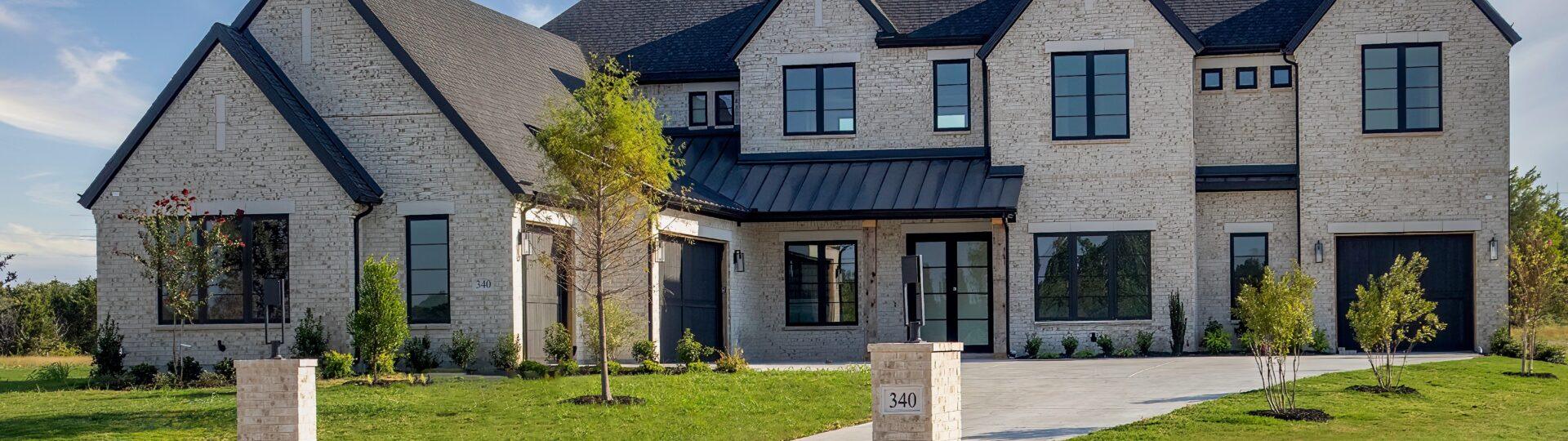
Custom Home vs. Production Home: Which Is Right for You in Omaha?
Building a new home is an exciting opportunity. But before choosing floor plans, finishes, or even a lot, you need to make one important decision: Should you build a custom home or choose a production home?
Both options offer the benefits of new construction. However, they provide very different experiences when it comes to design flexibility, construction quality, personalization, and long-term value.
For homeowners in Omaha, Elkhorn, Bennington, Gretna, and surrounding communities, understanding these differences can help you make a more confident investment.
In this guide, we’ll compare custom homes and production homes, explain what affects their costs, and help you decide which approach best fits your lifestyle and priorities.
Table of Contents
-
What Is the Difference Between a Custom and Production Home?
-
Custom Home vs. Production Home Comparison
-
Design Flexibility and Personalization
-
Construction Quality and Materials
-
Cost Differences in Omaha
-
Construction Timelines
-
Choosing the Right Lot
-
Long-Term Value and Ownership
-
Which Type of Home Is Right for You?
-
Common Mistakes to Avoid
-
Frequently Asked Questions
What Is the Difference Between a Custom Home and a Production Home?
A custom home is designed around your specific needs, lifestyle, and property. A production home uses an established floor plan with a limited selection of changes and upgrades.
The biggest difference comes down to how much control you have over the finished home.
What Is a Custom Home?
A custom home starts with your vision.
Rather than selecting a house from a builder’s existing collection, you work with a team to develop a home that reflects how you want to live.
You can influence nearly every aspect of the design, including:
-
Floor plan and room dimensions
-
Architectural style and exterior materials
-
Kitchen layout and cabinetry
-
Ceiling heights and window placement
-
Structural systems and insulation
-
Outdoor living spaces
-
Home offices, gyms, and entertainment areas
-
Interior finishes and architectural details
Custom home builders also have greater flexibility to design around unique properties, challenging lots, and specific architectural requirements.
The result is a home that fits your lifestyle rather than requiring you to adapt your lifestyle to an existing design.
What Is a Production Home?
A production home is built using an established collection of floor plans.
Production builders often construct multiple homes within the same development. They use repeatable designs, standardized materials, and established construction processes to improve efficiency.
Homeowners typically choose from available floor plans and personalize certain features.
These choices might include cabinetry colors, countertops, flooring, lighting, and exterior finishes.
However, major structural changes are often limited or unavailable.
Production homes can be a practical choice for homeowners who find an existing floor plan they love and prefer a more streamlined purchasing process.
The National Association of Home Builders recognizes both approaches as established forms of new home construction.
Custom Home vs. Production Home: Side-by-Side Comparison
Understanding the differences becomes easier when you compare the two options directly.
| Feature | Custom Home | Production Home |
|---|---|---|
| Floor Plan | Designed for your needs | Pre-designed layouts |
| Design Flexibility | Extensive | Limited |
| Materials | Greater choice and control | Standardized selections |
| Lot Selection | Often homeowner-selected | Typically builder-controlled |
| Construction Cost | Generally higher | Generally lower |
| Build Timeline | Typically longer | Often shorter |
| Personalization | Extensive | Limited to available options |
| Builder Involvement | Often more personalized | Varies by company |
| Architectural Details | Highly customizable | Mostly predetermined |
| Long-Term Value | Depends on design and quality | Depends on design and quality |
Neither approach guarantees better construction quality.
What matters is the builder’s standards, the materials used, and how carefully the team manages construction.
For homeowners seeking a highly personalized home with premium materials and thoughtful architectural details, custom construction offers clear advantages.
1. Design Flexibility: Creating a Home Around Your Lifestyle


One of the greatest advantages of custom home building is the freedom to design spaces around how you actually live.
Imagine you’re building a home in Elkhorn.
You enjoy entertaining, want a spacious kitchen, and need a dedicated home office. You also want a large covered patio that connects naturally to your main living area.
With a production home, you would need to find an existing floor plan that includes most of these features.
With a custom home, you can design them into the home from the beginning.
Why Custom Floor Plans Matter
A thoughtful floor plan improves more than appearance. It affects how comfortably and efficiently your home functions every day.
Consider these examples:
Kitchen design: Instead of accepting a standard kitchen layout, you can create a larger island, a hidden pantry, or a dedicated prep kitchen.
Primary suite: You can design a private retreat with separate vanities, a spacious shower, and a closet that connects directly to the laundry room.
Garage space: You can accommodate oversized vehicles, workshop space, additional storage, or specialty equipment.
Future needs: You can incorporate wider doorways, a main-floor primary suite, or other features that support aging in place.
These decisions can be difficult and expensive to change after construction.
Builder’s Tip: Start your floor plan by thinking about your daily routines rather than simply choosing the number of bedrooms and bathrooms. How you move through your home matters just as much as its square footage.
2. Construction Quality: What Really Matters Behind the Walls?


Two newly built homes can look remarkably similar while having very different construction specifications.
The difference often lies in the materials and systems you cannot see after construction.
Structural Materials and Framing
A well-built home starts with a strong foundation and carefully planned structural system.
At Gottsch Construction, we prioritize materials that support durability, performance, and long-term value.
Our standard specifications include:
-
Floor trusses: Provide flexibility for mechanical systems and can help create open layouts.
-
AdvanTech subflooring: Engineered to provide strength, stiffness, and moisture resistance during construction.
-
ZIP System wall sheathing: Combines structural sheathing with an integrated water-resistive barrier when installed correctly.
-
Pella Impervia windows: Offer fiberglass construction and low-maintenance performance.
-
James Hardie fiber cement siding: Provides a durable exterior finish with proper installation and maintenance.
-
Spray foam insulation: Can improve air sealing and thermal performance when correctly designed and installed.
These materials represent an investment in the home’s underlying performance.
However, premium products alone do not guarantee a premium home.
Proper installation, moisture management, inspections, and attention to detail are equally important.
Energy Efficiency and Comfort
Omaha homeowners experience hot summers, freezing winters, strong winds, and significant seasonal temperature changes.
Your home’s insulation, windows, air sealing, and heating and cooling systems all play an important role in maintaining comfort.
Custom construction allows you to evaluate these systems together rather than simply accepting a standard package.
For example, thoughtful window placement can improve natural light while limiting unwanted summer heat gain.
A properly designed heating and cooling system can provide more consistent temperatures throughout the home.
And careful air sealing can help reduce drafts and unnecessary energy loss.
The goal isn’t simply to build a beautiful home. It’s to build one that performs well for years to come.
3. How Much More Does a Custom Home Cost in Omaha?
Cost is one of the most common questions homeowners ask when comparing custom and production homes.
In most cases, custom construction requires a greater financial investment.
That difference comes from personalized design, material choices, construction complexity, and the additional planning involved.
Custom Home Building Costs in Omaha
At Gottsch Construction, our custom home projects generally start around $600,000, excluding the lot.
Most of our custom homes fall between $700,000 and $2 million or more, depending on size, design, materials, and project requirements.
Production homes typically cost less because builders can repeat floor plans, standardize materials, and spread certain costs across multiple projects.
However, comparing base prices alone can be misleading.
What Should You Compare Between Builder Estimates?
Before deciding which builder offers the better value, review the actual construction specifications.
| Cost Consideration | Why It Matters |
|---|---|
| Foundation | Soil conditions and engineering affect cost |
| Framing | Structural design affects strength and layout |
| Windows | Product specifications affect comfort and maintenance |
| Insulation | Material and installation affect energy performance |
| Exterior Materials | Durability and maintenance vary |
| Cabinetry | Construction, hardware, and customization affect cost |
| Allowances | Unrealistic allowances can lead to added expenses |
| Site Work | Grading, utilities, and drainage vary by lot |
A home with a lower initial price may require additional upgrades to meet your expectations.
Conversely, an expensive home isn’t automatically better built.
The key is understanding exactly what your investment includes.
For a deeper breakdown, read our guide to the cost of building a custom home in Omaha.
Is a Custom Home Worth the Additional Investment?
For homeowners who plan to stay in their homes for many years, custom construction can provide meaningful benefits.
You can prioritize durable materials, thoughtful layouts, and features that support your lifestyle.
You may also avoid the expense of remodeling spaces that never worked well in the first place.
However, not every custom upgrade increases resale value by its full cost. Highly personal features should serve your needs first, rather than being treated as guaranteed financial returns.
4. Construction Timelines: How Long Does Each Option Take?
Another important difference between custom and production homes is the construction timeline.
Production builders often have an advantage because their floor plans, material packages, and construction processes are already established.
Some even offer completed homes that are ready for purchase.
How Long Does a Custom Home Take in Omaha?
For a typical custom home in the Omaha area, homeowners should plan for approximately 12–18 months from initial planning through move-in.
The active construction phase commonly takes around 8–12 months, although larger or more complex projects can take longer.
A typical custom home building process includes:
Step 1: Initial Consultation and Planning
Discuss your goals, property, investment range, and design priorities.
Step 2: Architectural Design and Budget Development
Develop floor plans, review specifications, and align the design with your investment goals.
Step 3: Engineering, Selections, and Permitting
Complete structural requirements, make key material selections, and obtain necessary approvals.
Step 4: Construction
Complete site work, foundation, framing, mechanical systems, insulation, finishes, and inspections.
Step 5: Final Walkthrough and Move-In
Review the finished home, complete remaining details, and prepare for occupancy.
What Can Delay a Custom Home?
Several factors can affect construction schedules in Nebraska.
These include severe weather, permitting requirements, material lead times, design changes, and subcontractor availability.
A well-organized builder anticipates these challenges and develops a realistic schedule before construction begins.
At Gottsch Construction, we use JobTread construction management software to organize schedules, track project progress, and keep clients informed.
This provides greater visibility throughout the building process.
5. Choosing the Right Lot for Your Custom Home


Your property plays a major role in how your home looks, functions, and performs.
Production builders typically offer homes within specific neighborhoods or developments.
Custom builders often provide greater flexibility to build on a lot you already own or one you purchase.
This creates opportunities to consider properties in Omaha-area communities such as Elkhorn, Bennington, Gretna, Valley, and Waterloo.
What Should You Evaluate Before Buying Land?
Before purchasing a lot, consider:
-
Soil conditions: Will the foundation require special engineering?
-
Topography: How will the slope affect excavation, drainage, and basement design?
-
Utilities: Are water, sewer, electricity, and gas readily available?
-
Setbacks: How much of the property can you actually build on?
-
Neighborhood restrictions: Are there architectural requirements or builder restrictions?
-
Orientation: How will sunlight affect the home’s layout and outdoor spaces?
-
Site access: Can construction equipment and material deliveries reach the property efficiently?
One of the most expensive mistakes homeowners make is purchasing land before confirming whether it can accommodate their desired home.
A beautiful lot isn’t always an easy lot to build on.
Builder’s Tip: Involve your custom home builder before finalizing your land purchase whenever possible. Early site evaluations can reveal costs and design limitations that aren’t obvious during a property showing.
6. Long-Term Value: Thinking Beyond Move-In Day
When comparing homes, it’s easy to focus on the purchase price.
But the cost of owning a home extends far beyond the day you move in.
Maintenance, energy use, repairs, and future renovations all affect your long-term investment.
Durable Materials Can Reduce Future Maintenance
Consider two homes with different exterior materials.
One uses lower-cost siding that may require more frequent maintenance. The other uses premium fiber cement siding designed for long-term durability.
The premium option may cost more initially, but it could reduce certain maintenance needs over time.
Actual results depend on the product, climate exposure, installation quality, and ongoing care.
The same principle applies to windows, roofing, flooring, cabinetry, and mechanical systems.
A Better Floor Plan Can Reduce Future Remodeling
Imagine building a home with a small kitchen and limited storage.
Five years later, your family’s needs change. You decide to remove walls, expand cabinetry, and redesign the space.
Those changes can become expensive because they involve modifying an existing structure.
Custom home building allows you to consider future needs before construction begins.
This doesn’t mean predicting every change in your life.
It means making thoughtful decisions that give your home flexibility as your needs evolve.
7. Which Type of Home Is Right for You?
Choosing between a custom and production home comes down to your priorities.
A Production Home May Be Right for You If:
-
You find an existing floor plan that meets your needs.
-
You prefer fewer design decisions.
-
You want a more predictable selection process.
-
You need a shorter timeline.
-
You’re comfortable with the builder’s standard materials and available upgrades.
A Custom Home May Be Right for You If:
-
You want a home designed specifically for your lifestyle.
-
You value architectural details and distinctive design.
-
You want greater control over construction materials.
-
You have a specific lot or location in mind.
-
You prioritize craftsmanship and long-term performance.
-
You’re willing to invest more time in thoughtful planning.
-
You want a closer working relationship with your builder.
What About Semi-Custom Homes?
Semi-custom construction offers a middle ground.
These homes typically begin with an existing floor plan but allow more flexibility than traditional production construction.
Depending on the builder, you may be able to adjust room sizes, modify layouts, or select from a broader range of materials.
For homeowners who like an established design but want a few meaningful changes, this can be a worthwhile option.
However, the term semi-custom means different things to different builders.
Always ask which changes are actually permitted before signing a contract.
8. Common Mistakes Homeowners Make When Comparing Builders
Even experienced homeowners can overlook important details when comparing construction options.
Here are five mistakes worth avoiding.
Mistake 1: Comparing Price Per Square Foot Alone
Price per square foot doesn’t tell you enough about construction quality, materials, or included features.
Always compare detailed specifications and project scope.
Mistake 2: Focusing Only on Visible Finishes
Beautiful countertops and cabinetry can make a strong first impression.
But structural systems, insulation, waterproofing, and installation quality deserve equal attention.
Mistake 3: Underestimating the Importance of Preconstruction Planning
Changes become more expensive once construction begins.
A thorough design and selection process helps reduce delays, unexpected costs, and unnecessary changes.
Mistake 4: Assuming Every Custom Builder Offers the Same Experience
Some builders specialize in architectural design and luxury construction. Others focus on modifying existing plans.
Ask how your builder manages scheduling, communication, quality control, and financial reporting.
Mistake 5: Choosing a Builder Without Understanding Their Process
The builder you choose will guide one of the largest investments you’ll make.
Look for clear communication, detailed proposals, organized scheduling, and a consistent approach to construction quality.
A strong building process is just as important as the finished product.
Frequently Asked Questions About Custom vs. Production Homes
Is a custom home better quality than a production home?
Not necessarily. Custom construction gives homeowners more control over materials, design, and specifications, but quality depends on the builder, installation practices, and construction oversight. Both types of homes can be well built.
Are custom homes more expensive than production homes?
Generally, yes. Custom homes typically involve more design work, greater material flexibility, and less standardized construction. The final difference depends on the home’s size, features, site conditions, and specifications.
Can I build a custom home on my own lot in Omaha?
Yes. Many custom builders work with homeowners who already own property. However, zoning, utilities, soil conditions, neighborhood restrictions, and site access should be reviewed before construction planning moves forward.
How much does a luxury custom home cost in Omaha?
At Gottsch Construction, custom home projects generally begin around $600,000 before land costs. Most projects range from $700,000 to $2 million or more, depending on the design, size, materials, and location.
How long does it take to build a custom home in Omaha?
A reasonable planning range is 12–18 months from initial design through completion. The construction phase often takes approximately 8–12 months. Complex homes, site conditions, and material availability can extend the schedule.
Can I make changes during custom home construction?
Yes, but changes made after construction begins may increase costs or affect the schedule. Finalizing major decisions during preconstruction helps create a more predictable experience.
Do custom homes have better resale value?
Custom homes can appeal to buyers who value unique design, premium materials, and desirable locations. However, resale value depends on market conditions, neighborhood, home design, and buyer preferences. Not every custom feature adds equal resale value.
What is the biggest advantage of building a custom home?
The biggest advantage is the ability to create a home around your specific lifestyle. Instead of adapting to an existing design, you can plan the layout, features, and materials to support how you want to live.
Final Thoughts: Build a Home That Fits the Life You Want to Live
Choosing between a custom home and a production home isn’t simply about comparing prices or floor plans.
It’s about deciding what matters most to you.
Production homes offer convenience, established designs, and a more standardized building experience.
Custom homes offer greater flexibility, personalized design, and the opportunity to make thoughtful decisions about materials, comfort, and long-term performance.
For homeowners who value craftsmanship, quality, and a home designed around their lifestyle, custom construction can be a rewarding investment.
The most important decision is finding a builder who understands your vision and has the experience, organization, and commitment to bring it to life.
Build With Confidence. Build With Gottsch Construction.
At Gottsch Construction, we believe a custom home should reflect more than your personal style. It should reflect the way you live.
We work with homeowners throughout Omaha, Elkhorn, Bennington, Gretna, and surrounding communities to create thoughtfully designed homes built with premium materials and careful attention to detail.
From early planning through the final walkthrough, our goal is to make your building experience organized, transparent, and enjoyable.
You bring the vision. We’ll bring the craftsmanship.
Ready to explore building a custom home in Omaha? Connect with Gottsch Construction to discuss your ideas and learn more about our approach.