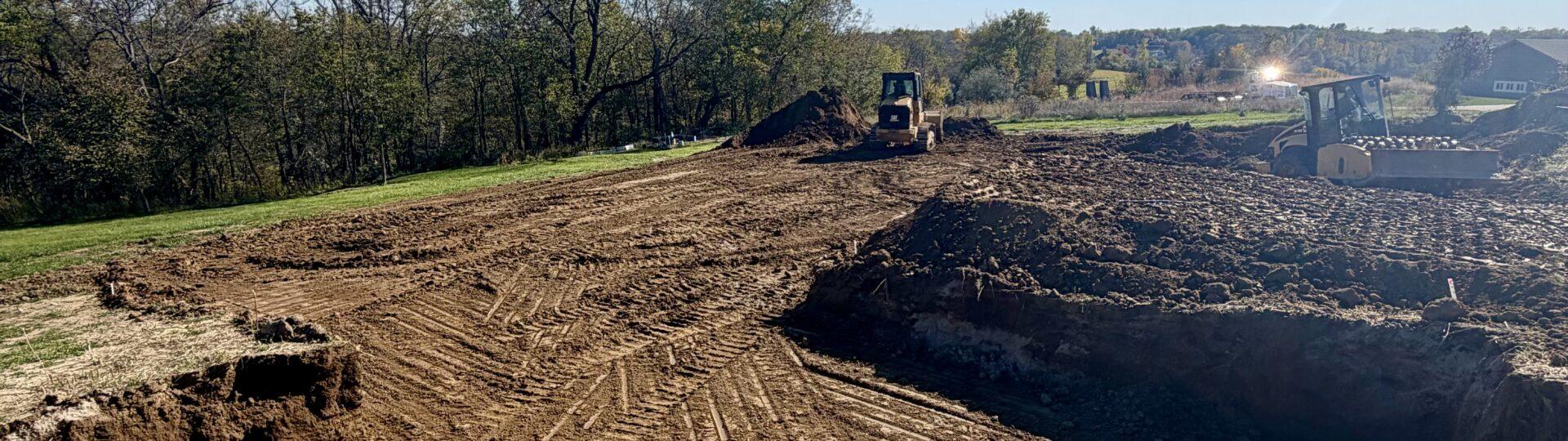
Buying Land to Build a Custom Home in Omaha: 12 Things to Know Before You Buy
Gottsch Construction | Custom Home Building Guide
Building a custom home starts long before the foundation goes in. One of the most important decisions you’ll make is choosing the right piece of land.
Whether you’re considering a spacious acreage in Bennington, a residential lot in Elkhorn, or a property in Gretna, the land you choose will influence nearly every part of your home. From the floor plan and foundation to the driveway and outdoor living spaces, your lot plays a major role in what you can build and how much it will cost.
But here’s something many homeowners don’t realize: Not every beautiful lot is a good lot to build on.
A property may look perfect at first glance, yet hidden challenges like poor soil conditions, drainage issues, utility access, or neighborhood restrictions can create unexpected expenses.
At Gottsch Construction, we believe a successful custom home starts with thoughtful planning. Understanding what to look for before purchasing land can help you make a confident decision and protect your investment.
This guide covers 12 important factors to consider when buying land to build a custom home in Omaha and the surrounding communities.
Table of Contents
-
Choose Your Builder Before Buying Land
-
Understand the True Cost of the Lot
-
Evaluate the Lot’s Topography
-
Investigate Soil Conditions
-
Verify Utility Availability
-
Review Zoning and Building Restrictions
-
Consider Your Home’s Orientation
-
Evaluate Drainage and Flood Risks
-
Understand Neighborhood Requirements
-
Plan for Driveways and Outdoor Living
-
Consider Long-Term Property Value
-
Complete Your Due Diligence
1. Choose Your Custom Home Builder Before Buying Land
One of the most common mistakes homeowners make is purchasing land before consulting a custom home builder.
It’s easy to fall in love with a property because of its location, views, or privacy. However, a beautiful lot doesn’t always mean it’s the right fit for your home.
An experienced builder can help you evaluate a property before you commit to purchasing it.
Why early builder involvement matters
Your builder can help assess:
-
Whether your desired floor plan will fit the lot
-
Potential excavation and foundation challenges
-
Site access for construction equipment
-
Utility availability and connection requirements
-
Drainage and grading considerations
-
Potential site development expenses
-
Neighborhood architectural requirements
For example, imagine purchasing a wooded acreage outside Omaha with plans for a large ranch-style home.
After buying the property, you discover that the buildable area is much smaller than expected due to setbacks, easements, and steep terrain.
Your original floor plan may no longer work without major changes.
Involving your builder early can help identify these challenges before they become expensive problems.
Builder Tip: When possible, have your builder review a potential lot before your purchase becomes final. A property that looks ideal on paper may require substantial site preparation.
2. Understand the True Cost of Buying Land
The advertised purchase price is only one part of the total investment.
When planning a custom home in Omaha, it’s important to understand the difference between the price of the land and the cost of making that land ready for construction.
Common land development expenses
| Expense | What it includes |
|---|---|
| Land survey | Verifying property boundaries, elevations, and improvements |
| Soil testing | Evaluating soil conditions and foundation requirements |
| Excavation | Preparing the site for the foundation |
| Grading | Shaping the land for drainage and construction |
| Utility connections | Bringing water, sewer, gas, and electricity to the home |
| Driveway installation | Creating permanent access to the property |
| Tree removal | Clearing trees and vegetation where needed |
| Permits and fees | Required approvals and applicable connection charges |
| Retaining walls | Supporting slopes and managing grade changes |
Not every property will require all these expenses.
A developed residential lot may already have utilities nearby and a relatively level building area. An undeveloped acreage may require significant additional work.
Why the lowest-priced lot isn’t always the best value
Consider two hypothetical properties.
LOT A
$125,000
Purchase price
Estimated site development
$75,000
Total investment
$200,000
LOT B
$155,000
Purchase price
Estimated site development
$20,000
Total investment
$175,000
Illustrative example only, not actual Omaha lot pricing or project estimates.
Although Lot B costs more upfront, it results in a lower combined land and site development investment.
The lesson is simple: Evaluate the total cost of a build-ready lot, not just its purchase price.
3. Evaluate the Lot’s Topography and Elevation
Topography refers to the shape, slope, and elevation of the land.
These features directly influence your home’s design, foundation, drainage, and construction costs.
Flat lots vs. sloped lots
Flat or gently sloped lots
Often allow simpler grading, foundation layouts, and driveway access, although drainage still needs careful planning.
Sloped lots
Can create opportunities for walkout basements and scenic views, but may require more excavation, engineering, or retaining walls.
A sloped lot isn’t necessarily a disadvantage.
In fact, many homeowners specifically seek walkout basement lots because they allow natural light and direct backyard access from the lower level.
However, the slope must work with your home’s layout.
Questions to ask about the terrain
-
Will the lot support a walkout, daylight, or standard basement?
-
How much excavation will the home require?
-
Will retaining walls be necessary?
-
Can the driveway maintain a practical slope?
-
Where will stormwater flow after construction?
-
Will the finished yard provide usable outdoor space?
Builder Tip: Don’t select a floor plan based solely on the lot’s square footage. The property’s elevation and usable building area are equally important.
4. Investigate Soil Conditions Before Building
What lies beneath the surface can be just as important as what you see above it.
Soil conditions affect foundation design, excavation, drainage, and long-term structural performance.
In the Omaha area, soil conditions can vary significantly from one property to another.
Some sites contain clay-rich soils that expand and shrink as moisture levels change. Other properties may have fill material, soft soils, or conditions that require additional engineering.
Why geotechnical testing matters
A geotechnical investigation helps determine whether the soil can properly support your proposed home.
Depending on the project, an engineer may evaluate:
-
Soil composition and bearing capacity
-
Expansive soil potential
-
Groundwater conditions
-
Existing fill and compaction
-
Foundation support recommendations
-
Site drainage considerations
Testing may reveal the need for additional excavation, engineered fill, foundation modifications, or other corrective measures.
These improvements can add to the construction cost, but identifying them early allows for better planning.
Our Recommendation: For a significant custom home investment, consider a site-specific geotechnical investigation before finalizing the foundation design. The appropriate testing scope should reflect the property’s conditions and the engineer’s recommendations.
5. Verify Utility Availability and Connection Costs
Utility access is one of the most overlooked parts of purchasing land for a custom home.
Just because a property sits near an existing neighborhood doesn’t mean all utilities are readily available at the building site.
Before purchasing land, determine how your home will receive essential services.
Utilities to investigate
| Utility | Important questions |
|---|---|
| Water | Is public water available, or will you need a private well? |
| Sanitary sewer | Is a sewer connection available, or will you need a septic system? |
| Electricity | Where is the nearest service connection, and is adequate capacity available? |
| Natural gas | Is gas service available at the property? |
| Internet | Which providers serve the location, and what connection options exist? |
| Storm drainage | Are there drainage easements or required improvements? |
Special considerations for acreage properties
If you’re looking at land outside established subdivisions in areas like Valley, Waterloo, Blair, or rural Bennington, utility planning becomes especially important.
A property without public water or sewer may require a private well and an onsite wastewater system.
These systems need appropriate design, permits, and sufficient space.
Even if public utilities are available along the road, extending service to a distant building site can add substantial expense.
Builder Tip: Ask utility providers for written information about service availability, connection requirements, and estimated fees. Never assume utilities are included simply because a listing describes the property as buildable.
6. Review Zoning, Setbacks, and Building Restrictions
Before purchasing land, verify that local regulations allow you to build the home you envision.
Zoning regulations and property restrictions can affect everything from the home’s location to its height, size, and permitted uses.
Important items to review
Building setbacks: Required distances between your home and property boundaries can limit the available building area.
Easements: Utility, drainage, and access easements may restrict where you can build.
Lot coverage: Local rules may limit how much of the property buildings and other improvements can occupy.
Building height: Height restrictions may influence roof design and the number of stories.
Accessory structures: If you plan to build a detached garage, pool house, or workshop, confirm those structures are permitted.
Architectural restrictions: Some neighborhoods establish requirements beyond local building codes.
Omaha-area properties may fall under different city, county, or subdivision jurisdictions. The rules that apply to one property may differ from those on a nearby lot.
The City of Omaha’s planning and mapping resources and Douglas County’s GIS tools are useful starting points for researching zoning and property information.
City Planning Website+1
Builder Tip: Have your builder and designer review the actual buildable area before finalizing your land purchase. A large lot doesn’t always provide a large building envelope.
7. Consider Your Home’s Orientation and Natural Light
The direction your home faces influences comfort, energy performance, and how your living spaces feel throughout the day.
This is especially important when designing a custom home because you have the opportunity to plan window placement and room layouts around the property.
How orientation affects your home
-
South-facing windows: Can provide useful winter sunlight when designed with appropriate shading.
-
West-facing windows: May create strong afternoon sun and increased summer cooling demands.
-
East-facing windows: Often provide pleasant morning light.
-
North-facing windows: Typically provide more even, indirect daylight.
In Nebraska, seasonal temperature changes make thoughtful window placement especially valuable.
Large windows can create beautiful living spaces, but they also need the right glass performance, shading, and insulation strategy.
Design around the property
Think about how you’ll use your home.
Do you want morning sunlight in your kitchen? Would you prefer a shaded outdoor living area during summer evenings? Is there a particular view you’d like to capture from your great room?
Your home’s orientation should support your lifestyle, not simply follow the direction of the street.
Builder Tip: Consider the lot and floor plan together. Thoughtful orientation can improve everyday comfort without requiring major upgrades later.
8. Evaluate Drainage and Flood Risks
Proper drainage is essential to the long-term performance of your home.
Water should flow away from the foundation and toward appropriate drainage areas without creating problems for neighboring properties.
Before buying land, evaluate how water moves across the site during heavy rainfall.
Warning signs to watch for
-
Low areas where water collects
-
Evidence of erosion or washouts
-
Drainage channels crossing the property
-
Nearby creeks or flood-prone areas
-
Significant runoff from adjacent properties
-
Existing drainage easements
If the lot lies near a creek, river, or low-lying area, review official floodplain information and applicable development requirements.
Nebraska’s floodplain regulations can require additional permits and construction standards for affected properties.
dnr.nebraska.gov+1
Don’t overlook grading requirements
Some projects require stormwater and grading approvals.
In Omaha, grading permits apply to qualifying land-disturbing activities, including certain projects involving an acre or more or smaller sites within larger developments.
Public works+1
A qualified builder and site engineer can help determine which requirements apply to your property.
Builder Tip: Drainage isn’t something to figure out after the house is built. Your site plan, foundation elevations, and finished grading should work together from the beginning.
9. Understand Neighborhood and Developer Requirements
Many Omaha-area custom home neighborhoods have architectural guidelines and developer requirements.
These rules can help maintain a consistent level of quality throughout the neighborhood, but they may also influence your design decisions.
Common requirements include
-
Minimum home square footage
-
Approved exterior materials
-
Roof pitch and design standards
-
Garage placement and orientation
-
Landscaping requirements
-
Exterior color guidelines
-
Construction timelines
-
Builder approval requirements
Some developments also require homeowners to build with an approved builder or purchase lots through a particular builder.
If you already have a builder in mind, confirm that the neighborhood allows you to work with that company.
Review the covenants before purchasing
Request the neighborhood’s recorded covenants, conditions, and restrictions, along with any current architectural guidelines.
Don’t rely solely on a real estate listing or verbal assurances.
Builder Tip: If you want a particular exterior design, detached building, swimming pool, or side-load garage, verify that the neighborhood permits it before purchasing the lot.
10. Plan for Driveways, Garages, and Outdoor Living Spaces
When evaluating land, homeowners naturally focus on where the house will sit.
But the areas surrounding your home deserve just as much attention.
Your driveway, garage, patio, landscaping, and outdoor living spaces all need to work together.
Think beyond the home’s footprint
Consider whether the property can accommodate:
-
A three-car or larger garage
-
A side-load or courtyard garage
-
A covered outdoor living area
-
An outdoor kitchen or fireplace
-
A swimming pool or future pool installation
-
A spacious backyard
-
Additional parking
-
Landscape features and privacy screening
A narrow lot may limit garage placement. A steep backyard could require retaining walls to create a usable patio. A long driveway may add cost and create snow-removal challenges during Nebraska winters.
These details matter because your property should support the way you want to live.
Builder Tip: Create a preliminary site layout showing the house, driveway, outdoor living areas, and potential future improvements before committing to the property.
11. Consider the Property’s Long-Term Value
Building a custom home is a significant investment.
While your primary goal should be creating a home that fits your lifestyle, it’s also wise to consider how the location may influence long-term value.
Factors that can influence desirability
Location: Access to employment centers, shopping, recreation, and major roads can affect convenience and future buyer interest.
School districts: Even homeowners without school-age children may consider school district boundaries when evaluating a property.
Neighborhood quality: Established architectural standards and well-maintained surrounding properties can support neighborhood appeal.
Future development: Undeveloped land nearby may eventually become residential, commercial, or roadway improvements.
Lot characteristics: Privacy, views, usable outdoor space, and thoughtful home placement can all influence desirability.
Avoid overbuilding for the location
A thoughtfully designed custom home should reflect your priorities while remaining appropriate for its surroundings.
For example, a highly customized luxury home on a challenging lot may cost significantly more to build than comparable properties in the neighborhood.
That doesn’t automatically make it a poor decision. However, it’s important to understand the difference between personal enjoyment and potential resale value.
Builder Tip: Focus on timeless design, quality materials, practical layouts, and lasting craftsmanship. These choices can provide value throughout your ownership, regardless of future market conditions.
12. Complete Your Due Diligence Before Closing
Once you’ve identified a promising property, take the time to verify the details.
Due diligence is the process of investigating a property before making a final purchase commitment.
It’s one of the most important steps in protecting your investment.
Your custom home lot evaluation checklist
Pre-Purchase Checklist
0 of 14 complete
Protect your purchase with appropriate contingencies
When negotiating a land purchase, consider working with your real estate professional and attorney to establish suitable due diligence periods and contingencies.
Depending on the transaction, these may address financing, surveys, inspections, soil investigations, and confirmation that the property can support your intended home.
The exact protections will depend on the property and purchase agreement.
Builder Tip: Don’t let the excitement of finding a great lot rush your decision. Taking additional time to investigate the property can prevent much larger expenses later.
Should You Buy Land First or Design Your Custom Home First?
This is one of the most common questions homeowners ask when beginning the custom home building process.
The best approach is usually to coordinate both decisions rather than completing them separately.
Here’s how the two approaches compare.
| Approach | Advantages | Potential drawbacks |
|---|---|---|
| Buy land first | Allows you to secure a desired location | May limit home design or reveal unexpected site costs |
| Design home first | Helps establish layout, style, and space needs | The design may not fit available properties |
| Plan land and home together | Helps align property selection, design, and overall investment | Requires early coordination with your builder and design team |
Our recommendation
Start by establishing your goals, preferred location, general home design, and overall investment range.
Then work with your builder to evaluate potential lots.
Once you identify a suitable property, your builder and design team can begin refining the home around its unique characteristics.
This approach helps create a more organized and informed building experience.
How Much Should You Budget for Land When Building a Custom Home in Omaha?
There isn’t one ideal percentage of your total investment that should go toward land.
The right amount depends on your preferred location, lot size, home design, and site development requirements.
For perspective, Gottsch Construction’s custom home projects typically start around $600,000 for construction, excluding the lot, with many projects ranging from approximately $700,000 to $2 million or more.
Your complete investment should account for more than the house itself.
Example of a custom home investment
| Category | Illustrative amount |
|---|---|
| Land purchase | $175,000 |
| Site preparation and development | $45,000 |
| Custom home construction | $900,000 |
| Design, engineering, and other project costs not included above | $35,000 |
| Owner contingency reserve | $65,000 |
| Illustrative total investment | $1,220,000 |
These figures demonstrate how to organize a total project budget. They are not current market quotes or an estimate for a specific property. Actual costs and contract inclusions vary.
A well-planned project budget should clearly identify which costs fall within the construction contract and which expenses remain separate.
This helps prevent double counting and provides a clearer understanding of the total investment.
Frequently Asked Questions About Buying Land for a Custom Home in Omaha
Can I buy my own lot and hire a custom home builder?
Yes. Many custom home builders work with clients who already own their land. However, you should confirm that the property doesn’t have builder restrictions or other requirements that limit your options.
Is it cheaper to build on a flat lot or a sloped lot?
A flat or gently sloped lot often requires less complex site work, but that isn’t always the case. Soil conditions, drainage, utility access, and foundation design can significantly affect costs. A sloped lot may also offer valuable opportunities for a walkout basement.
Do I need a soil test before building a custom home?
A geotechnical investigation is often a wise investment, particularly for larger custom homes or properties with uncertain soil conditions. Your builder and engineer can recommend the appropriate testing based on the site and proposed design.
Can I build a custom home on an acreage outside Omaha?
Yes, provided the property meets applicable zoning, access, utility, wastewater, and permitting requirements. Acreage properties may require additional planning for private wells, septic systems, longer driveways, and utility extensions.
How do I know whether a lot is suitable for a walkout basement?
The property’s slope and proposed foundation elevations are key factors. Your builder and designer can review a topographic survey and preliminary site plan to determine whether a walkout basement is practical.
How long does it take to prepare land for a custom home?
Site preparation varies based on the property’s condition, weather, permits, utility work, and engineering requirements. A developed subdivision lot may require relatively straightforward preparation, while a rural acreage may need more extensive work before construction begins.
Should I purchase land before getting preapproved for construction financing?
It’s generally wise to discuss financing with your lender before purchasing land. Some lenders offer land loans or construction-to-permanent financing, but terms and requirements vary. Understanding your financing options early can help you plan the full investment.
Final Thoughts: The Right Lot Is the Foundation of a Great Custom Home
Choosing land is about much more than finding a location you love.
The right property should support your home’s design, fit your overall investment, and provide the space and features that matter most to you.
From soil conditions and drainage to utility connections and neighborhood restrictions, every detail deserves careful consideration.
By involving an experienced custom home builder early, you can identify potential challenges, make informed decisions, and move forward with greater confidence.
At Gottsch Construction, we believe exceptional homes begin with thoughtful planning. Our goal is to help you navigate the building process with clear communication, careful attention to detail, and a commitment to lasting quality.
Planning to Build a Custom Home in Omaha?
Whether you’ve already found the perfect lot or you’re just beginning your search, Gottsch Construction can help you understand what to consider before moving forward.
We work with homeowners throughout Omaha, Elkhorn, Bennington, Gretna, and surrounding communities to create custom homes designed around their lifestyle, priorities, and vision.
You bring the vision. We’ll bring the craftsmanship.