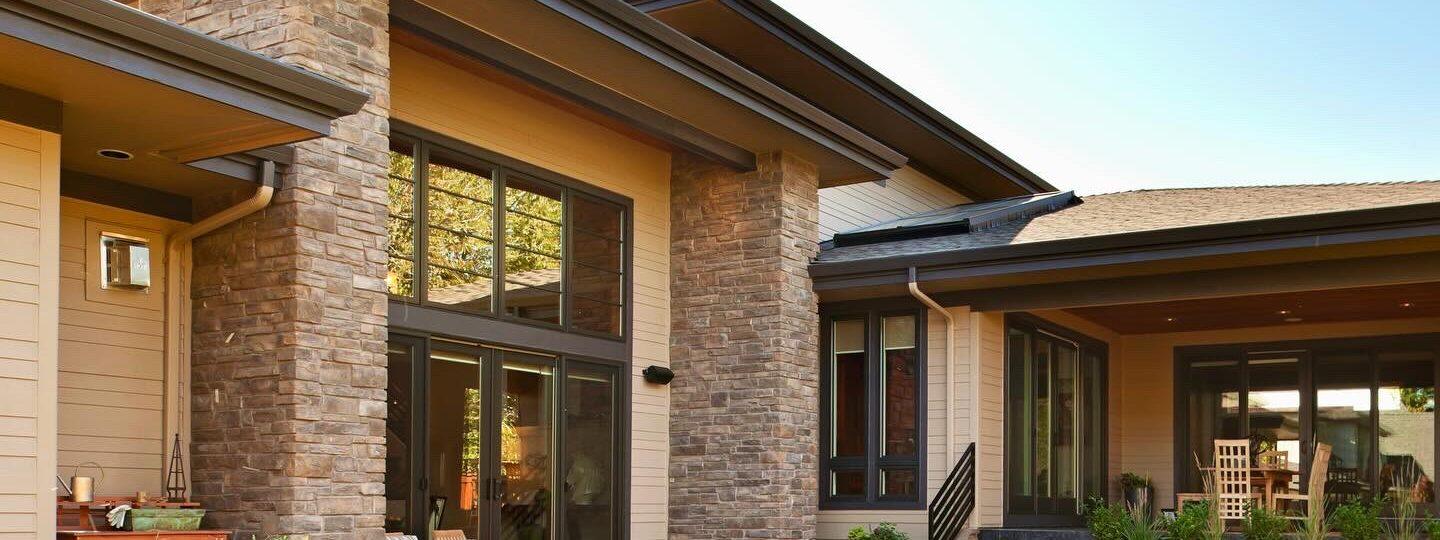
How to Choose a Custom Home Builder in Omaha: 15 Questions to Ask Before You Hire
Choosing a custom home builder is one of the most important decisions you will make during your entire home-building journey.
Your builder does much more than coordinate construction. They help guide your budget, manage hundreds of details, coordinate subcontractors, solve problems, protect the schedule, oversee quality, and turn your plans into a finished home.
The right builder can make an incredibly complex process feel organized and manageable.
The wrong one can turn that same process into months of frustration, unexpected costs, communication problems, and compromises you never expected to make.
If you are preparing to build a custom home in Omaha, Elkhorn, Bennington, Gretna, Papillion, or another surrounding community, do not choose your builder based on price or photos alone.
Ask better questions.
Here are 15 questions that can tell you far more about the builder you are considering.
Quick Answer: How Do You Choose a Custom Home Builder?
When choosing a custom home builder, evaluate their experience, construction quality, communication process, budgeting system, contract, scheduling practices, subcontractors, warranty, references, and approach to problem-solving.
The best builder is not necessarily the one with the lowest estimate.
Look for a builder who:
- Communicates clearly
- Provides a detailed and transparent budget
- Uses proven construction methods
- Maintains strong subcontractor relationships
- Has an organized building process
- Helps you make decisions before they become urgent
- Stands behind their work after move-in
- Can clearly explain where your money is going
- Has experience building the level of home you want
Above all, choose someone you trust.
You may work closely with your builder for a year or longer. You should feel confident in both their construction knowledge and the way they run their business.
Table of Contents
- What experience do you have building custom homes?
- Can I tour your completed homes and current projects?
- Who will manage my project?
- How do you develop the construction budget?
- What is included—and not included—in your estimate?
- How do allowances work?
- How do you handle change orders?
- How will you communicate with me?
- How do you manage selections and deadlines?
- How do you build and manage the construction schedule?
- Who are your subcontractors?
- What construction standards and materials do you use?
- How do you handle quality control?
- What warranty do you provide?
- Can I speak with previous clients?
- Red flags to watch for
- How to compare custom home builders
- Frequently asked questions
- Final thoughts
1. What Experience Do You Have Building Custom Homes?
Start with experience, but go deeper than asking how many years someone has been in business.
Ask what they have actually built.
There is a major difference between building production homes, completing smaller remodeling projects, and managing a fully custom home from design through completion.
A true custom home can involve:
- Architectural coordination
- Structural engineering
- Site development
- Complex foundations
- Custom framing
- Specialty windows and doors
- Advanced mechanical systems
- Custom cabinetry
- High-end finishes
- Detailed selections
- Long-lead materials
- Hundreds of individual decisions
Your builder needs to understand how those pieces affect one another.
Ask follow-up questions such as:
- How long have you worked in residential construction?
- How many custom homes do you build each year?
- What price range do you typically build in?
- What types of homes have you built?
- Have you built homes similar in size and complexity to ours?
- How involved are you personally during construction?
Years alone do not guarantee quality.
Look for experience combined with good systems, strong construction knowledge, attention to detail, and professional project management.
Builder Tip
Ask the builder about a difficult project they completed and what they learned from it.
Experienced builders usually have plenty of stories.
More importantly, they should be able to explain how they solved the problem.
2. Can I Tour Your Completed Homes and Current Projects?
Finished photography matters, but it only tells part of the story.
Ask whether you can see previous work or, when appropriate, a home currently under construction.
A completed home shows you craftsmanship.
An active jobsite can show you how the builder operates.
Look for:
- Jobsite cleanliness
- Material protection
- Organization
- Framing quality
- Attention around windows and doors
- Mechanical coordination
- Waterproofing details
- Overall workmanship
You do not need to understand every construction detail.
Instead, pay attention to whether the builder can confidently explain what you are looking at and why they chose to build it that way.
A strong builder should care just as much about what gets covered by drywall as what you eventually see in the finished kitchen.
3. Who Will Actually Manage My Project?
Do not assume the person selling you the home will also manage construction.
Ask exactly who will oversee your project after the contract gets signed.
Depending on the company, you may work with:
- The company owner
- A dedicated project manager
- A superintendent
- A selections coordinator
- An office administrator
- Several different people
There is nothing wrong with having a team.
The important question is whether responsibilities are clearly defined.
Ask:
- Who is my primary contact?
- Who visits the jobsite?
- Who checks subcontractor work?
- Who updates the schedule?
- Who answers construction questions?
- Who approves work before payments get issued?
- Who handles selections?
- Who handles warranty requests?
You should understand who is accountable for your project before construction begins.
4. How Do You Develop the Construction Budget?
This may be one of the most revealing questions you can ask.
An early estimate is naturally going to contain assumptions.
But as your plans and specifications develop, your budget should become increasingly detailed.
Ask your builder where their numbers come from.
Are they using:
- Historical averages?
- Square-foot pricing?
- Current subcontractor bids?
- Supplier quotes?
- Detailed takeoffs?
- Allowances?
- A combination?
For serious custom-home planning, a simple price-per-square-foot estimate should not be the final budgeting method.
Two homes with identical square footage can have dramatically different costs.
Roof complexity, foundation size, window packages, cabinetry, mechanical systems, finishes, grading, retaining walls, and dozens of other decisions influence the final investment.
Your builder should be able to explain that clearly.
What You Want to See
As your project approaches contract, the budget should become specific enough that you understand where your money is going.
A detailed budget may separate categories such as:
- Excavation
- Foundation
- Framing
- Roofing
- Windows
- Exterior finishes
- Plumbing
- Heating and cooling
- Electrical
- Insulation
- Drywall
- Cabinetry
- Countertops
- Flooring
- Interior trim
- Painting
- Appliances
- Landscaping
Transparency upfront reduces surprises later.
5. What Is Included—and Not Included—in Your Estimate?
A low estimate means very little if it does not include the same scope as another builder’s estimate.
This is one of the biggest mistakes homeowners make when comparing builders.
Imagine receiving two proposals:
Builder A: $900,000
Builder B: $825,000
Builder B appears to save you $75,000.
But what if Builder B excluded:
- Landscaping
- Appliances
- Window treatments
- Utility connections
- Driveway work
- Retaining walls
- Certain light fixtures
- Architectural fees
- Permit costs
Suddenly, the lower estimate may not actually cost less.
Ask every builder:
“What costs should I expect that are not included in this number?”
A professional builder should answer that question clearly.
6. How Do Your Allowances Work?
Allowances represent budgeted amounts for items that have not yet been fully selected or priced.
Common allowances may include:
- Appliances
- Plumbing fixtures
- Lighting
- Flooring
- Tile
- Countertops
- Cabinet hardware
Allowances are not automatically a problem.
Unrealistic allowances are.
For example, a proposal can appear more affordable if the builder includes a $5,000 appliance allowance when the homeowner realistically expects a $25,000 appliance package.
The price looks better today.
The budget problem simply appears later.
Ask Your Builder:
- How did you determine each allowance?
- Is it realistic for the quality level we discussed?
- What happens if we exceed an allowance?
- What happens if we spend less?
- Does the allowance include labor, material, tax, and delivery?
- Is builder markup applied to overages?
Good allowances should reflect your expectations, not make the initial proposal look artificially attractive.
7. How Do You Handle Change Orders?
Almost every custom home experiences some changes during construction.
Maybe you decide to add outlets.
Maybe you upgrade tile.
Maybe a field condition requires a design adjustment.
The important issue is not whether changes happen.
It is how the builder manages them.
A professional change-order process should clearly document:
- The requested change
- Added or deducted cost
- Schedule impact
- Required approval
- Updated project budget
Avoid informal arrangements that rely on verbal conversations or text messages.
Months later, nobody should be trying to remember who approved what.
A structured process protects both you and your builder.
8. How Will You Communicate With Me During Construction?
Great construction cannot compensate for terrible communication.
Building a custom home creates questions almost every week.
You need to know where answers will come from.
Ask your builder:
- How often will I receive updates?
- Will we have scheduled meetings?
- How are photos shared?
- Where can I see the project schedule?
- How do I approve selections?
- How do we document decisions?
- Who should I contact with questions?
- How quickly should I expect a response?
Some professional builders use project-management software that allows homeowners to follow schedules, selections, financial information, documents, photos, and communication in one place.
The specific software matters less than the system behind it.
You want communication that feels organized rather than scattered across emails, texts, phone calls, and handwritten notes.
Builder Insight
Good communication does not mean your builder calls you about every minor construction decision.
A strong builder handles construction.
They involve you when your input matters and give you enough information to feel confident about what is happening.
9. How Do You Manage Selections and Deadlines?
The selection process causes more schedule problems than many homeowners realize.
A custom home may require decisions about:
- Windows
- Exterior colors
- Roofing
- Siding
- Masonry
- Cabinets
- Countertops
- Plumbing fixtures
- Appliances
- Flooring
- Tile
- Lighting
- Hardware
- Paint
- Interior doors
- Trim profiles
Many of these decisions must happen months before installation.
For example, cabinets may require significant design and production time. Specialty windows, appliances, plumbing fixtures, and custom products can also carry long lead times.
A strong builder creates selection deadlines based on the construction schedule.
They do not simply call you on Tuesday and tell you they need your tile by Friday.
Ask whether the builder provides:
- A selection schedule
- Clear deadlines
- Vendor contacts
- Design assistance
- Budget information
- Approval documentation
- Lead-time tracking
A well-managed selection process keeps you from making expensive decisions under pressure.
10. How Do You Create and Manage the Construction Schedule?
Every builder should have a schedule.
But having one is different from actively managing one.
Ask how the builder plans construction and adjusts when conditions change.
A custom home depends on dozens of interconnected activities.
For example:
Framing cannot begin until the foundation reaches the proper stage.
Mechanical rough-ins depend on framing.
Insulation follows rough-in inspections.
Drywall follows insulation.
Cabinet installation depends on drywall, flooring strategy, measurements, production, and delivery.
One delay can affect several later activities.
Strong builders continually look ahead.
Ask:
- What is the expected construction timeline?
- How do you schedule subcontractors?
- How far ahead do you plan?
- How do you handle weather delays?
- How do material delays affect the schedule?
- How will I know if the completion date changes?
No builder can promise that construction will never encounter a delay.
The better question is whether they have a system for identifying problems early and adjusting the plan.
11. Who Are Your Subcontractors?
Your builder does not build your home alone.
Plumbers, electricians, framers, HVAC contractors, roofers, drywall crews, painters, finish carpenters, tile installers, and many other trades contribute to the final product.
That makes subcontractor relationships extremely important.
Ask:
- How long have you worked with your main subcontractors?
- How do you select trades?
- Do you use the lowest bidder?
- What happens when workmanship does not meet your standards?
- Who inspects subcontractor work?
Strong builders often develop long-term relationships with reliable trades.
Those relationships create value that homeowners rarely see.
A subcontractor who respects a builder’s standards, scheduling expectations, jobsite requirements, and quality expectations can make the entire project run more smoothly.
12. What Materials and Construction Standards Do You Use?
This question helps separate builders who focus primarily on finishes from builders who think about long-term performance.
Ask what products and construction methods the builder considers standard.
Then ask why.
Consider discussing:
- Subfloor systems
- Wall sheathing
- Windows
- Siding
- Roofing
- Insulation
- Exterior waterproofing
- Foundation systems
- Interior doors
- Cabinetry
- Heating and cooling equipment
A good builder should be able to explain where spending more money creates meaningful long-term value.
They should also tell you where spending more provides little benefit.
Look Beyond the Countertops
Homeowners naturally notice countertops, flooring, cabinets, and light fixtures.
But many of the most important decisions in your home eventually disappear behind walls.
A high-quality window installation will matter for decades.
Proper flashing matters.
A rigid subfloor matters.
Good insulation matters.
Proper moisture management matters.
Those choices will never photograph as well as a kitchen island.
They may matter much more to your experience living in the home.
13. What Is Your Quality-Control Process?
Do not settle for:
“We build quality homes.”
Every builder says that.
Ask how they verify it.
Quality control may involve inspections at key construction stages, documented checklists, project-manager walkthroughs, subcontractor corrections, pre-drywall reviews, and detailed completion inspections.
Ask:
- Who checks framing before mechanical work begins?
- Who reviews work before drywall covers it?
- How do you document corrections?
- How do you handle punch-list items?
- Do you perform a final quality inspection before homeowner walkthroughs?
Good construction rarely happens by accident.
It happens because somebody establishes a standard and consistently verifies that people meet it.
14. What Warranty Do You Provide?
Construction does not end the relationship the day you receive your keys.
Ask what happens after move-in.
You should understand:
- Written warranty coverage
- Warranty length
- What the warranty includes
- What it excludes
- How to submit a request
- Typical response times
- Manufacturer warranties
- Homeowner maintenance responsibilities
Also ask who handles warranty work.
A professional builder should have a defined process rather than expecting homeowners to chase individual subcontractors.
Get the warranty in writing and review it before signing your construction agreement.
15. Can I Speak With Previous Clients?
References remain one of the best ways to understand what working with a builder really feels like.
The Nebraska Department of Labor specifically recommends asking contractors for references and speaking with past customers when evaluating a contractor. It also recommends obtaining written estimates, contracts, proof of insurance, and warranty information before work begins.
Do not just ask references whether they like their house.
Ask about the experience.
Questions might include:
- Did the builder communicate well?
- Were costs clearly explained?
- Were there unexpected surprises?
- How were problems handled?
- Was the jobsite organized?
- Did the builder follow through?
- How was the punch list handled?
- How was warranty service?
- Would you hire the builder again?
That last question can tell you a lot.
Before You Hire: Verify the Builder’s Business
Beyond evaluating craftsmanship and communication, take a few minutes to verify the business itself.
Nebraska requires contractors and subcontractors doing business in the state to register with the Nebraska Department of Labor. The state also makes its contractor-registration database searchable by the public.
One important distinction: Nebraska’s Department of Labor states that contractor registration does not guarantee workmanship or protect homeowners from fraud. Registration should therefore serve as a basic verification step, not proof that someone is a great builder.
Ask your prospective builder for:
- Contractor registration information
- Proof of general liability insurance
- Workers’ compensation coverage when applicable
- Written contract
- Written warranty
- Business contact information
Then evaluate the much harder questions in this guide.
That is where you begin separating qualified contractors from exceptional custom builders.
Red Flags When Choosing a Custom Home Builder
Sometimes what a builder cannot explain tells you as much as what they can.
Pay attention to these warning signs.
1. The Price Seems Unusually Low
One proposal being significantly lower than every other proposal deserves investigation.
Maybe the builder found legitimate savings.
Or maybe important items are missing.
Ask why.
2. The Estimate Is Extremely Vague
You should not need to guess what a major construction category includes.
3. Allowances Seem Unrealistically Low
Artificially low allowances make the contract price look attractive while shifting costs into construction.
4. There Is No Defined Change-Order Process
Every change should have clear documentation.
5. There Is No Written Schedule
You do not need every date predicted perfectly, but the builder should have a construction plan.
6. Communication Already Feels Difficult
Pay attention to communication before you sign.
It rarely becomes more organized once the builder has several hundred thousand dollars of work underway.
7. The Builder Cannot Explain Their Construction Standards
A professional should be able to tell you what they build, how they build it, and why.
8. They Pressure You to Sign Quickly
A custom home represents a major investment.
You should have time to review the agreement, ask questions, and understand what you are buying.
9. They Avoid Providing References
That deserves additional questions.
10. Everything Is “Included” Without Details
The word included means very little until you understand exactly what product, quantity, allowance, or specification it represents.
How to Compare Custom Home Builders in Omaha
If you are interviewing several builders, create a simple scorecard.
Do not compare only price.
| Category | Builder A | Builder B | Builder C |
|---|---|---|---|
| Custom-home experience | |||
| Construction quality | |||
| Budget transparency | |||
| Communication | |||
| Project-management system | |||
| Selection process | |||
| Schedule management | |||
| Subcontractor quality | |||
| Warranty | |||
| References | |||
| Personal trust |
Give each category a score from 1 to 5.
Then look at the complete picture.
The builder who costs the least upfront may not provide the best long-term value.
Likewise, the most expensive builder is not automatically the best.
Your goal is to find the builder whose quality, process, experience, transparency, and expectations match yours.
Price Matters. But Value Matters More.
You should absolutely understand what your custom home will cost.
But price should not become the only deciding factor.
Imagine spending $1 million on a home.
Saving 3% by choosing the wrong builder might save $30,000 on paper.
But poor planning, weak quality control, unrealistic allowances, schedule problems, change orders, or construction defects could quickly erase that savings.
A well-built home should serve you for decades.
The builder you choose influences far more than the purchase price.
They influence the experience you have getting there and the quality you live with after construction ends.
Questions to Ask Yourself After Meeting With a Builder
Once the meeting ends, evaluate more than the answers they gave you.
Ask yourself:
- Did they listen?
- Did they explain things clearly?
- Did they ask thoughtful questions?
- Did they seem organized?
- Were they willing to discuss difficult topics?
- Did they provide realistic expectations?
- Did you feel pressured?
- Did they talk more about quality or simply about price?
- Do you trust them to tell you when something goes wrong?
- Would you feel comfortable working with this person for the next year?
That last question matters.
Building a custom home requires hundreds of conversations and decisions.
Trust matters just as much as craftsmanship.
Frequently Asked Questions About Choosing a Custom Home Builder
How many builders should I interview before building a custom home?
For many homeowners, interviewing two or three serious candidates provides enough perspective to compare experience, process, communication, and overall fit.
Interviewing too many builders can actually make the process more confusing, especially when every company estimates and structures projects differently.
Focus on qualified builders whose work and approach already align with what you want.
Should I choose the lowest custom-home bid?
Not automatically.
First confirm that every builder priced the same scope, specifications, allowances, site work, materials, and services.
A lower proposal can sometimes represent good value. In other situations, it simply contains fewer items or lower allowances.
Compare scope before price.
When should I contact a custom home builder?
Earlier than many homeowners expect.
Ideally, involve your builder during the planning stage and, when possible, before purchasing land or completing the architectural design.
Early builder involvement can help identify construction-cost implications, site challenges, design inefficiencies, and budget concerns before they become expensive to change.
Should I buy land before choosing my builder?
You can, but speaking with a builder first can reduce risk.
A beautiful lot may have difficult grading, utility issues, restrictive covenants, challenging soils, unusual setbacks, drainage concerns, or expensive site-development requirements.
A builder can help you evaluate those issues before you commit.
How long does it take to build a custom home in Omaha?
The answer depends on design complexity, permitting, site conditions, weather, material lead times, selections, and the builder’s workload.
Remember that the construction timeline represents only one part of the process.
Architectural design, engineering, estimating, selections, financing, permitting, and preconstruction planning all happen before excavation.
Should my builder help with the design process?
For a truly custom home, builder involvement during design can be extremely valuable.
Architects and designers focus heavily on layout and design. Your builder can provide construction pricing, material guidance, sequencing considerations, and constructability feedback.
The best results usually come from design and construction working together rather than operating independently.
What should be included in a custom home building contract?
Your agreement should clearly address the project scope, payment structure, construction documents, change orders, allowances, schedule expectations, insurance requirements, dispute procedures, warranty terms, and responsibilities of each party.
Because every project and agreement differs, consider having a qualified attorney review your contract before signing.
How can I check whether a Nebraska contractor is registered?
Nebraska maintains a searchable contractor-registration database through the Nebraska Department of Labor. Contractors doing business in Nebraska must register with the state before performing work.
Remember that registration confirms a regulatory requirement. It does not certify construction quality.
Choosing the Right Custom Home Builder Comes Down to Trust
Beautiful homes get attention.
But when you are deciding who should build yours, look deeper.
Look at how the builder plans.
How they communicate.
How they manage money.
How they select subcontractors.
How they protect quality.
How they solve problems.
And how they treat you before you have signed anything.
At Gottsch Construction, we believe your building experience should feel just as thoughtfully managed as your finished home.
Our process centers around planning, clear communication, organized project management, quality construction, and guidance from concept through completion. We intentionally take on a limited number of projects so we can stay closely involved with each one.
If you are considering building a custom home in Omaha, Elkhorn, Bennington, Gretna, Papillion, Valley, Waterloo, Blair, Fremont, or another nearby community, we would be happy to learn more about what you are planning.
You bring the vision. We’ll bring the craftsmanship.